Intimate Partner Violence in LGBTQ+ Relationships

Relational abuse does not occur in isolation from identity, culture, or systems of power.
For LGBTQ+ individuals, intimate partner violence can be shaped not only by interpersonal dynamics, but also by external forces such as homophobia, transphobia, stigma, and lack of affirming support systems.
This means that abuse within LGBTQ+ relationships can sometimes remain hidden for longer periods of time… not because it is less severe, but because it is more difficult to name, disclose, or access help for.
For some survivors, there is a fear that speaking about abuse within queer or trans relationships will reinforce harmful stereotypes that these relationships are “unstable” or “unsafe.” This can create additional silence around experiences of harm, even when significant abuse is occurring.
At the same time, abusive partners may intentionally exploit these fears. Tactics can include threatening to “out” someone’s identity, leveraging internalized shame, or isolating a partner from LGBTQ+ community spaces and affirming relationships.
The Scope of Intimate Partner Violence
Intimate partner violence is far more common than many people realize.
According to the Centers for Disease Control and Prevention (CDC):
More than 41% of women and 26% of men in the United States have experienced contact sexual violence, physical violence, and/or stalking by an intimate partner during their lifetime and reported a related impact.
Approximately 1 in 4 women and 1 in 10 men have experienced severe physical violence from an intimate partner.
Contrary to popular belief, intimate partner violence is not limited to heterosexual and cisgender relationships. Queer and trans people experience intimate partner violence at similar, and in some cases higher, rates than their heterosexual and cisgender peers.
According to the CDC's National Intimate Partner and Sexual Violence Survey:
44% of lesbian women, 61% of bisexual women , 26% of gay men, and 37% of bisexual men have experienced rape, physical violence, and/or stalking by an intimate partner at some point in their lives.
Research consistently shows that LGBTQ+ survivors often face additional barriers to seeking support, including fear of discrimination, lack of affirming services, community isolation, and concerns about reinforcing harmful stereotypes about LGBTQ+ relationships. Research has also found that Queer and transgender survivors may experience unique forms of abuse that specifically target their gender identity and access to resources.
These tactics can include:
Threatening to "out" someone without their consent
Misgendering or deadnaming as a form of control or humiliation
Restricting access to gender-affirming healthcare
Using a person's sexual orientation or gender identity to isolate them from support systems
Threatening custody, housing, employment, or immigration consequences
Exploiting fears of discrimination when seeking support from systems
Domestic violence shelters and support services have historically been designed with cisgender heterosexual women in mind, which can unintentionally exclude or alienate queer and trans survivors.
For many Queer and transgender survivors, the barriers to leaving abusive relationships can be compounded by experiences of discrimination within housing systems, healthcare settings, law enforcement, shelters, and social service agencies.
Violence Against Transgender People
Data from the National Coalition of Anti-Violence Programs (NCAVP) and other LGBTQ+ advocacy organizations consistently show that transgender people, particularly transgender women of color, face elevated rates of interpersonal violence.
According to the 2022 U.S. Transgender Survey, conducted by the National Center for Transgender Equality (now Advocates for Trans Equality), approximately 41% of transgender respondents reported experiencing intimate partner violence in their lifetime.
The 2015 U.S. Transgender Survey, one of the largest surveys of transgender adults in the United States, found that:
54% of respondents experienced some form of intimate partner violence, including coercive control, harassment, physical violence, or sexual violence.
Rates were even higher among transgender people who also experienced racism, poverty, disability, or housing instability.
In trans relationships specifically, abuse may include withholding gender-affirming care, using deadnaming or misgendering as a form of control, or undermining a partner’s gender identity as a way to erode self-trust and autonomy.
The Reality of Abuse
However, statistics alone do not capture the layered reality of these experiences. For many LGBTQ+ survivors, abuse exists alongside systemic barriers such as discrimination in housing, healthcare, employment, and law enforcement. These barriers can significantly limit options for safety, making it harder to leave, harder to be believed, and harder to access support that affirms identity.
For survivors of relational abuse, identity-based oppression can intensify vulnerability by limiting support options and increasing isolation, while also shaping the fear that speaking up may lead to further marginalization or disbelief.
Within this context, relational abuse cycles may become even more complex. The intermittent reinforcement of care, affection, and harm can be compounded by the absence of safe external support systems. A partner may become not only a source of emotional connection, but also one of the only accessible points of safety in a world that feels hostile or invalidating. This dynamic can deepen attachment to the cycle, even when harm is present.
Understanding relational abuse in LGBTQ+ relationships requires a dual lens: one that recognizes the universality of power and control dynamics in abusive systems, and another that understands how identity-based oppression can shape both vulnerability and survival strategies. To learn how systems of oppression, community isolation, and fear of invisibility can intensify and obscure patterns that are already difficult to see.
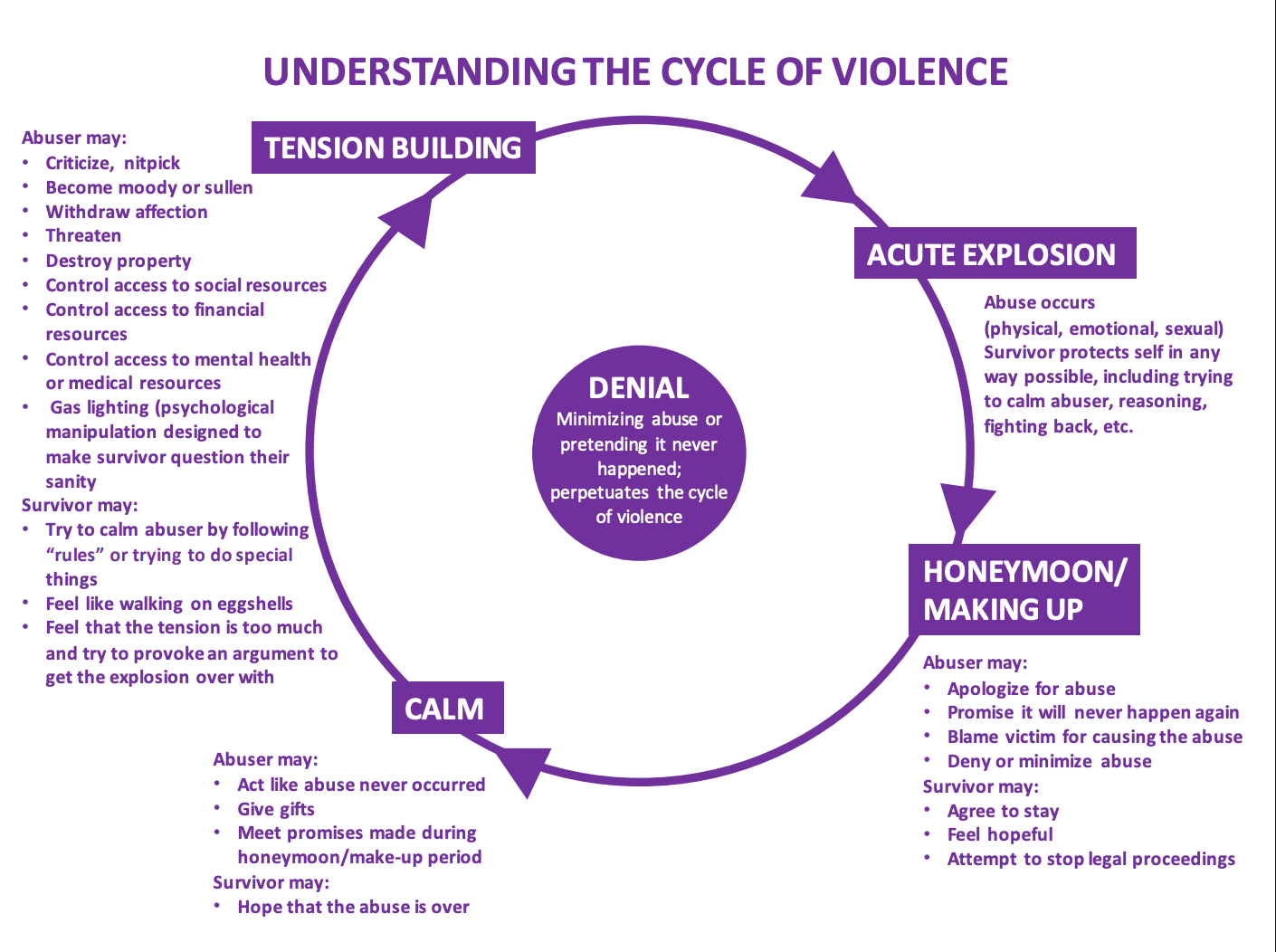
Emotional Abuse Often Precedes Other Forms of Abuse
One of the most misunderstood aspects of abuse is that it frequently begins with subtle attempts to gain power and control.
These behaviors may include:
Constant criticism
Monitoring communications and social media
Jealousy framed as love
Isolation from friends and family
Verbal threats and humiliation
Gaslighting and lying
Financial restrictions
Controlling daily decisions
Love bombing and intense affection
Excessive communication
Minimizing and denying impact
Blaming and scapegoating
The National Domestic Violence Hotline identifies coercive control as a pattern of behaviors designed to dominate, isolate, and control another person. While coercive control may not leave visible injuries, its psychological impact can be devastating.
Many survivors describe emotional and psychological abuse as particularly difficult to identify because it often unfolds gradually. Behaviors that initially appear as protectiveness, concern, or intense affection can evolve into monitoring, controlling, or coercive behaviors over time.
Abuse Is About Power and Control
A common misconception is that abuse is caused by anger, poor communication, or relationship conflict.
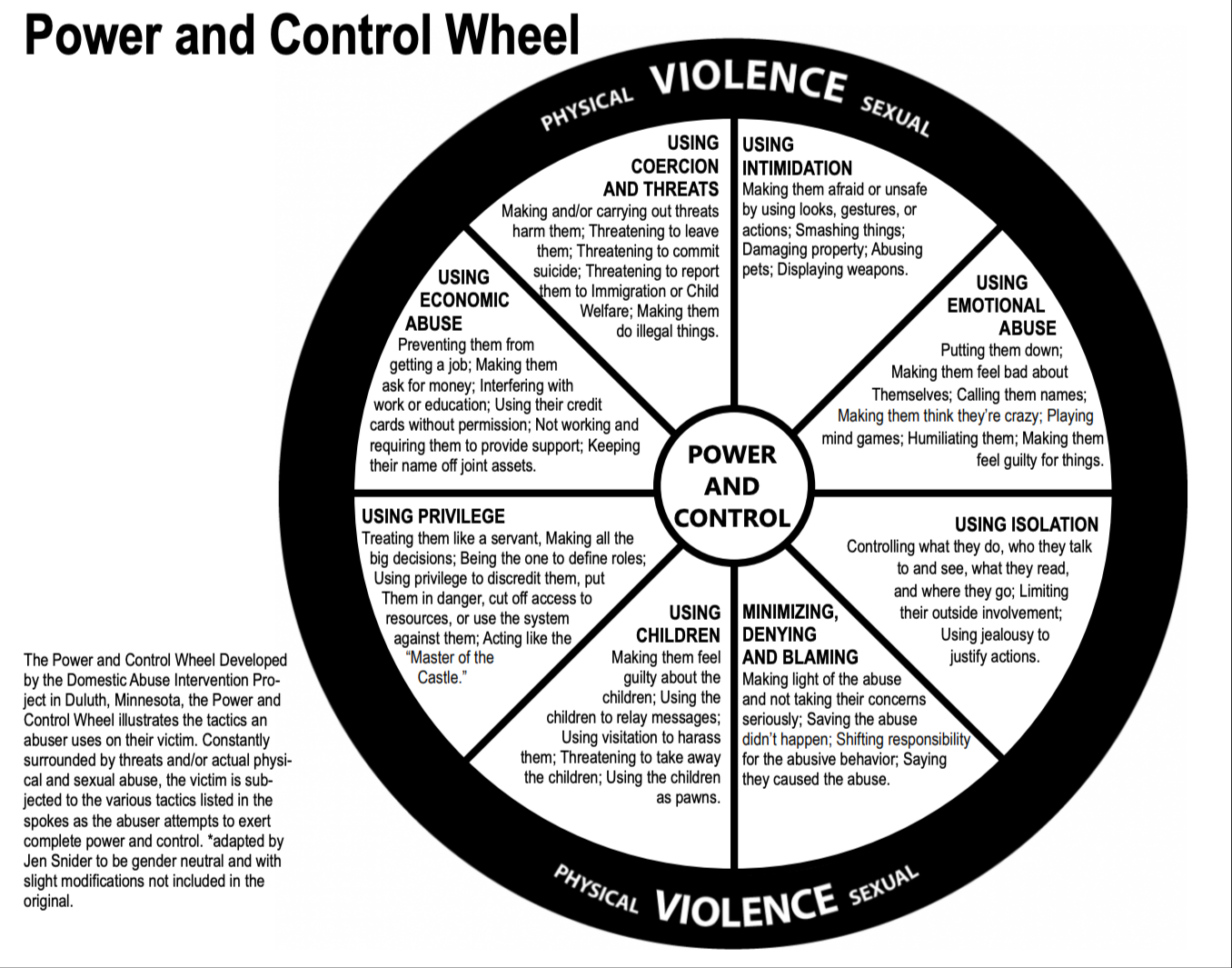
While healthy relationships experience conflict, abuse is fundamentally different. Abuse involves a pattern of behaviors intended to establish power, dominance, or control over another person.
The Duluth Model's Power and Control Wheel remains one of the most widely recognized frameworks for understanding abusive dynamics. It identifies tactics such as:
Intimidation
Emotional abuse
Isolation
Minimizing, denying, and blaming
Using children
Using privilege
Economic abuse
Threats and coercion
These tactics often work together to create an environment where the survivor's autonomy becomes increasingly restricted.
The Impact of Abuse on Mental Health
Relational abuse affects far more than the relationship itself.I ntimate partner violence is strongly associated with negative mental health outcomes, including depression, anxiety, PTSD, substance use, and suicidal ideation. For LGBTQ+ individuals, these effects are often compounded by minority stress ongoing exposure to stigma, discrimination, and social invalidation.
Research published by the American Psychological Association and other trauma-focused organizations has linked intimate partner violence with:
Depression
Anxiety disorders
Post-traumatic stress disorder (PTSD)
Complex Post-traumatic stress disorder (CPTSD)
Substance use disorders
Suicidal ideation
Chronic physical health conditions
A review published in The Lancet found that women who experienced intimate partner violence were significantly more likely to experience depression and other mental health concerns than those who had not experienced abuse.
Identity-based abuse (such as threats of outing, misgendering, or invalidating a partner’s identity) can further intensify psychological harm by eroding self-trust and increasing isolation. Limited access to affirming healthcare and fears of discrimination can also delay help-seeking and prolong distress. This can add complexity to the ongoing striggle LGBTQ people already face.
Research consistently shows that LGBTQ+ survivors of IPV report higher levels of psychological distress compared to those who have not experienced IPV .
Why Leaving Is Often Not a Single Event
One of the most persistent myths about abuse is the question: "Why don't they just leave?"
Research consistently shows that leaving an abusive relationship is often a process rather than a single decision. According to the National Domestic Violence Hotline, survivors may attempt to leave multiple times before permanently ending an abusive relationship. It often take 7 or more attempts to leave, for survivors to fully be free from the abuse.
Barriers can include:
Financial dependence
Housing instability
Fear of retaliation
Shared children
Community or religious pressures
Immigration concerns
identity based oppression and violence
Emotional attachment and hope for change
The period immediately after leaving can also be one of the most dangerous times for survivors, as abusive partners may escalate efforts to regain control.
Intimate partner violence is not only about isolated incidents of harm, but about repeating relational cycles shaped by power, control, attachment, and survival. For LGBTQ+ individuals, these dynamics often exist alongside identity-based oppression, which can intensify isolation, complicate access to support, and deepen psychological impact. Understanding IPV through this lens helps move beyond simplistic questions of “why didn’t they leave” and toward a more accurate recognition of how abuse is maintained and why it can be so difficult to name, interrupt, or escape without safety, affirmation, and sustained support.
Article Sources:
Centers for Disease Control and Prevention (CDC), National Intimate Partner and Sexual Violence Survey (NISVS): https://www.cdc.gov/violenceprevention/intimatepartnerviolence/
World Health Organization (WHO) – Violence against women / IPV and mental health impacts: https://www.who.int/news-room/fact-sheets/detail/violence-against-women
Meyer, I. H. (2003). Prejudice, social stress, and mental health in lesbian, gay, and bisexual populations: Conceptual issues and research evidence. Psychological Bulletin. https://doi.org/10.1037/0033-2909.129.5.674
National Coalition of Anti-Violence Programs (NCAVP), reports on LGBTQ+ intimate partner violence: https://avp.org
Advocates for Trans Equality (formerly National Center for Transgender Equality) : https://transequality.org
U.S. Transgender Survey: https://ustranssurvey.org
CDC NISVS Special Report: https://www.cdc.gov/violenceprevention
The National Domestic Violence Hotline https://www.thehotline.org/resources/what-is-coercive-control
Source: Domestic Abuse Intervention Programs (DAIP)https://www.theduluthmodel.org
Colorado College: https://www.coloradocollege.edu/other/wellness/pdfs/cycle%20of%20violence%20002.pdf
Connections for Abused Women and their Children: https://www.cawc.org/news/what-is-the-cycle-of-abuse/